Teamwork Makes Dreamwork: The People Behind Every Patient Journey
I often think what it takes to be a good specialist. Is it about the surgical technique I utilise, years of subspecialist training, or keeping up with the latest evidence? Yes, those things matter. I am grateful when patients gave a positive feedback on my professionalism and care, knowledge, and surgical skills. Those are things I have worked hard to develop over many years.
But if I’m being honest, the real secret to delivering great care isn’t any one person—it’s the team, not a credit to myself.
It Starts Before You Walk Through the Door
The patient journey doesn’t begin in my consulting room. It begins the moment someone picks up the phone or sends an email enquiring about our services. That first point of contact, our practice manager and secretary, sets the tone for everything that follows. They’re the ones who listen, reassure, coordinate, and make sure each patient feels seen before they’ve even met me. A warm voice on the other end of the line can make all the difference when someone is reaching out about something deeply personal.
The Care That Goes Beyond One Specialty
Urogynaecology sits at a crossroads of several disciplines. The conditions I treat - pelvic organ prolapse, incontinence, complex pelvic floor dysfunction — often need more than a single specialist’s perspective. That is why I work closely with pelvic floor physiotherapists, colorectal and pain specialist, and other allied health professionals to provide truly bespoke care.
This isn’t just about referring patients on. It’s about collaborating by sharing insights, discussing cases together, and building a plan that’s tailored to the whole person, not just one diagnosis. A physiotherapist might pick up on something I’ve missed. A colorectal surgeon might offer a perspective that changes the approach entirely. That’s the beauty of a multidisciplinary team.
In Theatre, It Takes a Village
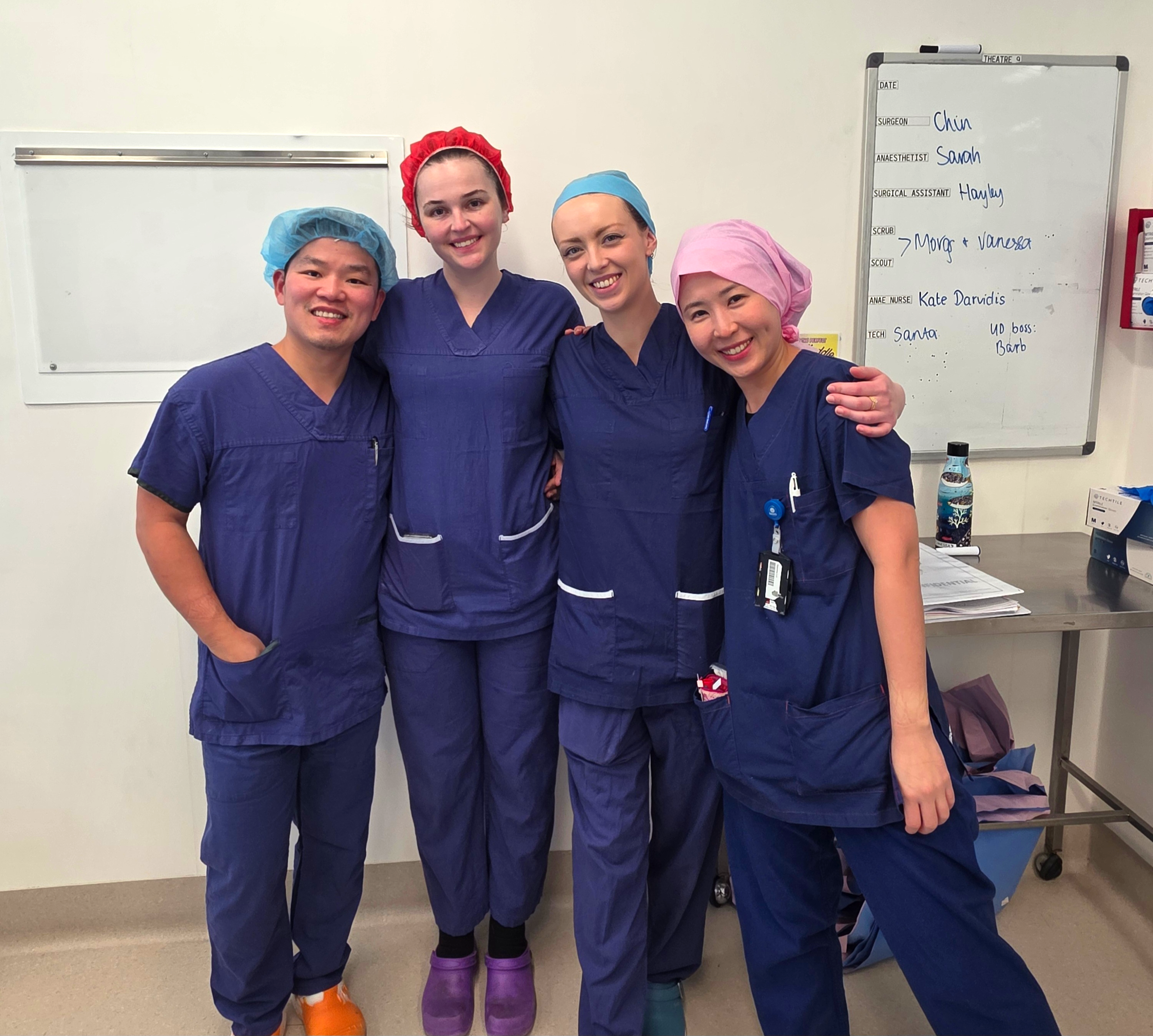
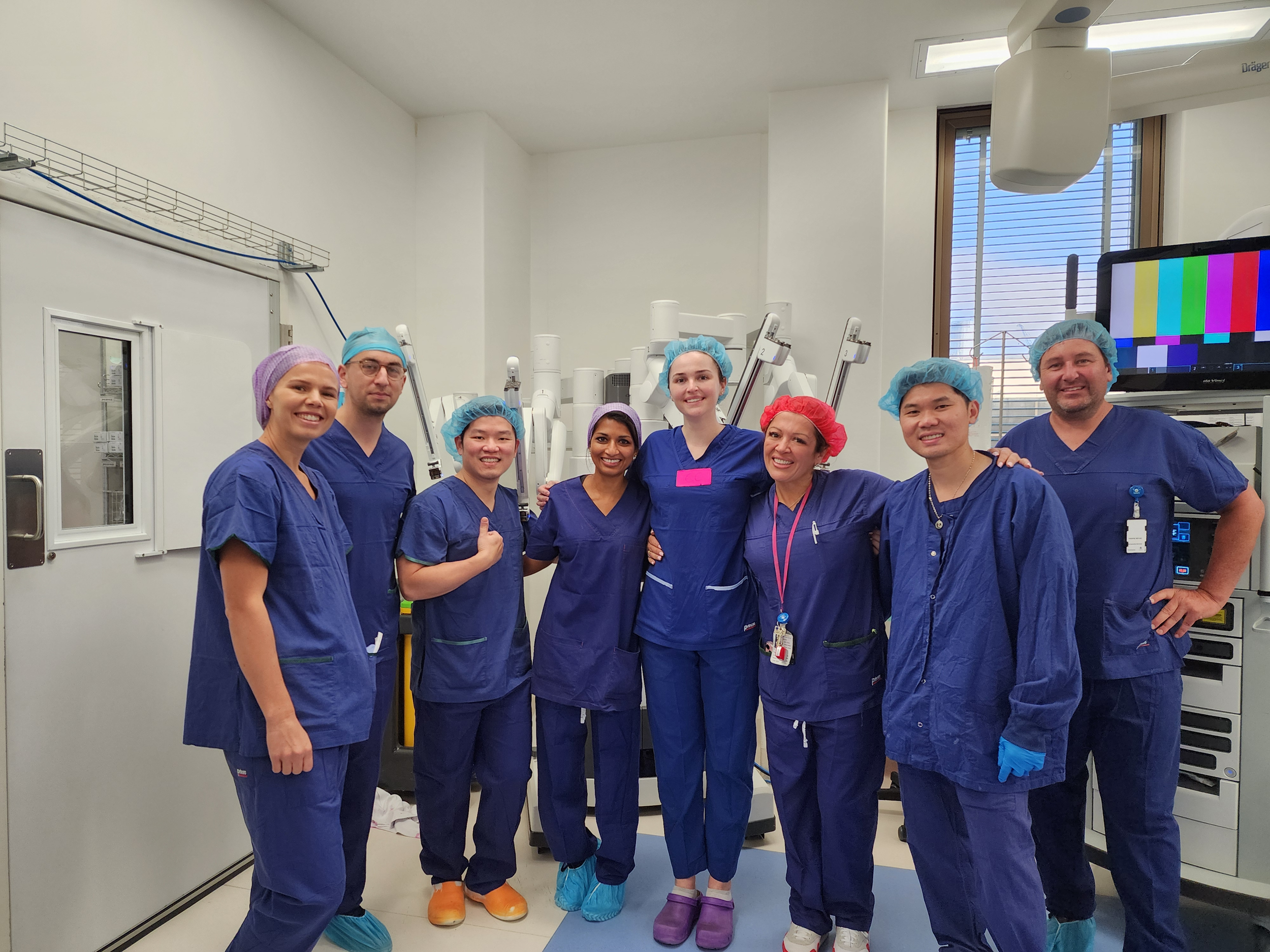
Nowhere is teamwork more visible than in the operating theatre. Surgery might have my name on it, but it simply doesn’t happen without the anaesthetist keeping the patient safe and comfortable, the surgical assistant working alongside me at the table to achieve efficient surgical flow, the scrub and scout nurses anticipating every instrument, the ANUM coordinating the flow of the room, and the theatre technicians making sure everything runs smoothly behind the scenes.
Each person in that room plays a critical role. When a team works well together — when there’s trust, communication, and mutual respect — you can feel it. The room is calm, the workflow is seamless, and the patient benefits most of all.
Recovery Doesn’t Happen by Itself
The teamwork doesn’t end when the surgery does. On the ward, our nursing team takes over. Monitoring recovery, managing pain, answering questions at 2am, and providing the kind of attentive, compassionate care that helps patients feel safe during their most vulnerable moments. They are the constant presence at the bedside, and their role in a patient’s recovery cannot be overstated.
Then there’s the kitchen team, whose contribution is easy to overlook but truly matters. The right meals at the right time. Gentle on the stomach, nutritionally balanced, play a real part in helping the body heal. Good nutrition after surgery isn’t a luxury; it’s part of the treatment.
And our pharmacists work quietly behind the scenes to ensure every patient receives the correct medications at the right doses, flagging any interactions, and carefully preparing discharge medications so that the transition home is smooth and safe. They’re a critical safety net in the postoperative journey.
The Journey Continues After Discharge
Going home after surgery isn’t the end of the story — it’s the beginning of rehabilitation. This is where our pelvic floor physiotherapists step back in, guiding patients through a structured postoperative pelvic floor muscle rehabilitation program. They work closely with each patient to restore strength, function, and confidence, ensuring that the benefits of surgery are supported by long-term recovery. It’s this continuity of care, from the consulting room through to rehabilitation, that truly makes the difference.
Why This Matters?
In private practice especially, it can be tempting to think success comes down to the individual specialist. But I’ve learned that the best outcomes come from the best teams. My training and expertise are only as effective as the people around me allow them to be.
So to my team — from the front desk to the operating theatre, from the ward to the pharmacy, and through to rehabilitation — thank you. You are the reason this works.
Because teamwork really does make the dream work!